MIOT Sentra
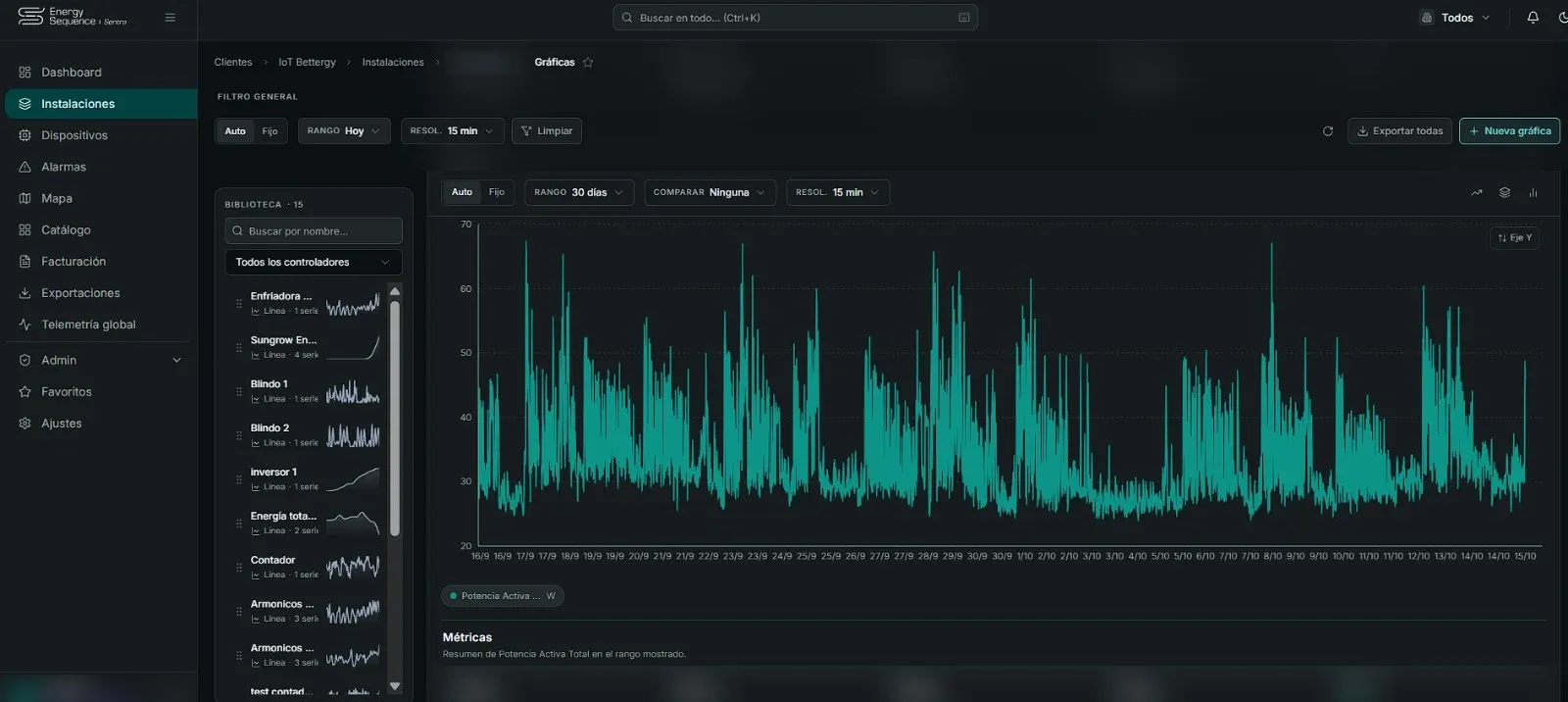
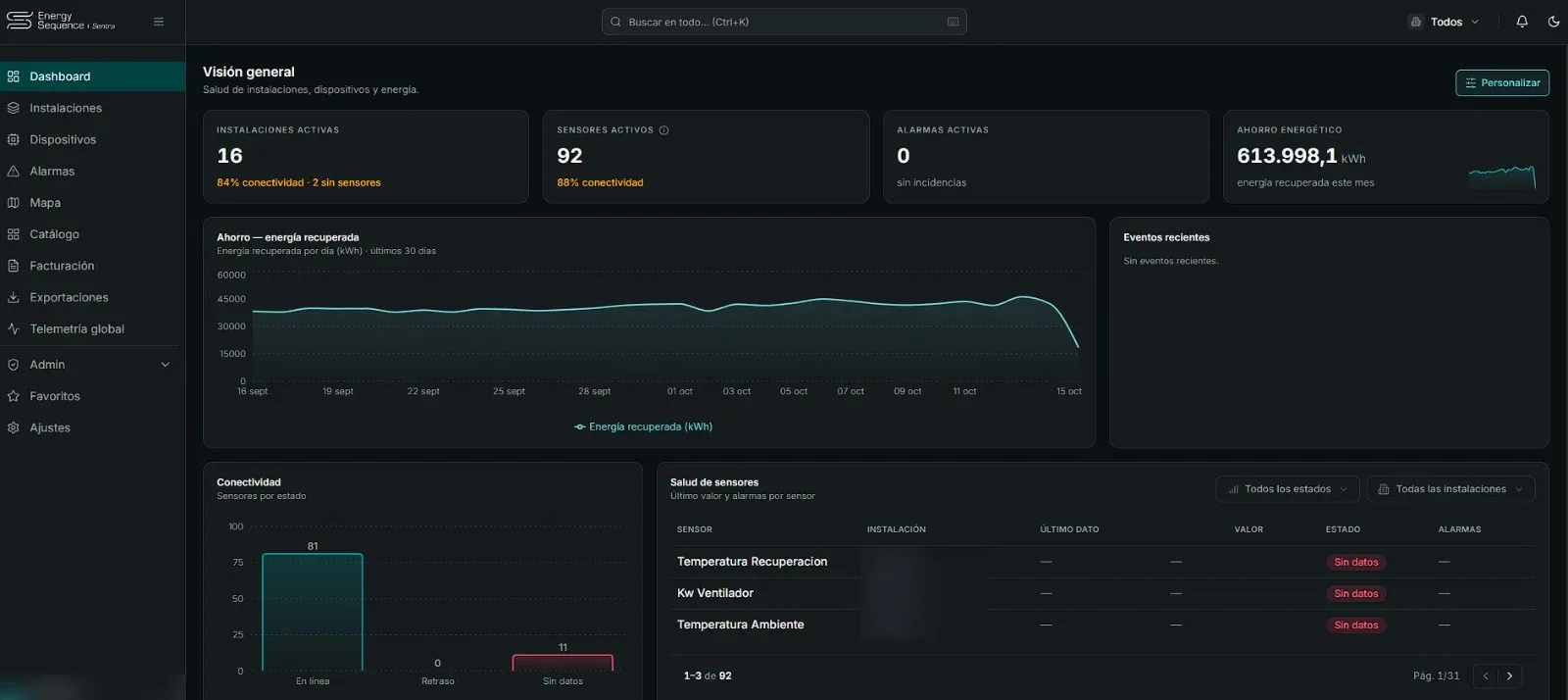
Monitoring for energy installations: controllers and sensors, live readings, year-long charts and energy-saving calculations. Built from scratch by two people and live in under two months.
The problem
Bettergy's IoT monitoring lived in MIOT Classic, a legacy Django monolith on MongoDB (mongoengine). It had to be replaced by a new platform, Sentra, on a tight deadline.
My role and the team
Two developers, with me leading the technical side while I also supported three colleagues on other projects. The IoT lead studied the requirements; I turned them into an architecture plan (database, stack and a set of Claude Code skills we wrote) to keep quality high at that speed.
Key decisions
- TimescaleDB hypertables for the sensor time series: a 1-year chart at 15-minute resolution went from ~5 s to under a second.
- A data model of client → users → installations → devices, where one user can belong to several clients with different roles. I proposed it over a user-first hierarchy, so internal staff run many clients from one account.
- Energy-saving formulas for pipes, computed from controller and sensor readings.
- A Next.js frontend over a Django API, learning TimescaleDB in about two weeks while designing the architecture.
Results
Live in month two and still running. 10+ clients and 100+ connected devices (controllers and sensors) in its first six months.